Saturday, June 9, 2012

Dallas on the Family Feud


It was indeed a truly wonderful moment in TV when the cast of Dallas joined Richard Dawson, along with Eight is Enough (well, in this case five will do just fine) and the crazy crew at One Day at a Time for game show mayhem! The air date was Monday, October 8th, 1979 and several shows, including the ones mentioned and Benson (of man, I adore Benson!) all gathered to raise money for their favorite charities. The Dallas crew went with Charlene Tilton's charity, the Kennedy Child Study Center, located in St. Johns Hospital in Santa Monica.

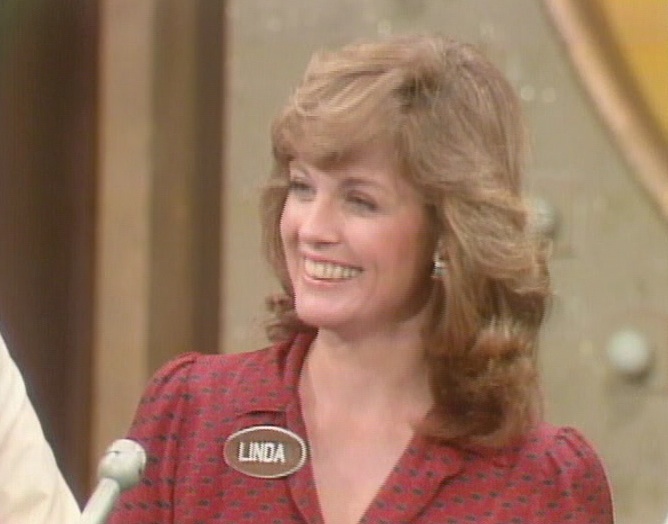
This was the first time the cast of Dallas appeared on Family Feud and they took it all the way to the $10,000 grand prize! However, the highlight of the show happened when Richard Dawson said he thought he recognized Charlene and she told him a story about meeting him when she was seven. Apparently he offered her candy and a smile, and the dirty jokes flowed for the rest of the show! Charlene was only 19 during this taping and she seems both amused and slightly uncomfortable about the way the story unfolded in front of our sullied eyes. In short, it was awesomeness. Richard, of course, handled everything with just the right touch of humor and all in all, this is what we call great TV! Here are a bunch of images from the episode which available on The All Star Family Feud DVD!


Let's start The Family Feud!


The crew are literally holding up JR! 


However, the Eight is Enough cast look like they have problems of their own! 


 Here are the gorgeous Dallas contestants:


Don't fret guys, the Speed Round makes us all nervous! 


The One Day at a Time cast hopes to botch J.R.'s grand success 


Has Dawson finally stumped J.R.?


Nope! Even Mizz Romano had to give J.R. a hand! 


 Speed Round #2: Same actors, same success! 


 J.R. puts another notch on his belt! Only this time it's a good notch! 
 

Tuesday, June 5, 2012

Dallas Countdown!


It's coming up all fast and furious, guys. The Dallas revival begins next Wednesday, June 13th at 9 PM! I'm so excited and what little information I've allowed myself to look at seems fairly positive, so I'm going to keep my hopes a little higher for this new series.

To celebrate the original Dallas, I'll be doing a few articles and of course, I invite everyone to check out the many posts I've already dedicated to all things Dallas. Also, I am posting some YouTube clips below to get the party started!


A look at the new opening:


A teaser for Dallas 2012


A series of promos for Dallas from the years 1978 - 1991


JR revs up Dallas 1986
 

Sunday, June 3, 2012

Richard Dawson (1932 - 2012)


I was deeply saddened today when I read that Richard Dawson passed away at the age of 79. As a staple of my childhood I always had a crush on the tan and suave Richard who first won my heart on Hogan Heroes and then again as the host of Family Feud. I actually didn’t watch Match Game until a little later in my life, where I instantly re-fell in love with him because he had such a down-to-earth persona and he was also incredibly funny.

Richard was born in Gosport, Hampshire, England on November 12th, 1932. His birth name was Colin Lionel Emm and he was young merchant marine and boxer. He would go on to marry Diana Dors (i.e. England’s Marilyn Monroe) in 1959 after he’d become a well-known comedian in England. They were married for seven years and had two children. By this time, Richard had changed his name to Dickie Dawson and he was well on his way to international stardom.


In 1965 Richard landed the part of Cpl. Peter Newkirk on Hogan’s Heroes, which starred the handsome Bob Crane and took place in a WWII prison camp. The show was so oddball, hilarious and well cast that it seemed completely inoffensive despite the setting and premise. I remember when rewatching the series just a couple of years ago how this setup would never fly now, but at the time it was really just silly fun. Dawson used a great cockney accent and I remember my little heart going pitter patter whenever he was on the screen (or Bob for that matter -- I had many crushes during my impressionable youth).

He would then become one of the original panelists of 70s version of Match Game, which is arguably one of the greatest game shows in TV history. The game itself seemed almost secondary because the panelists were the true draw to the show. For daytime television it could be quite racy, and host Gene Rayburn proved to be one of the best circus wranglers of all time. Dawson was the panelist who was most often chosen by the contestants during the big money rounds because he always made a truly honest effort to help them bring home some big bucks. I remember Charles Nelson Reilly said in an interview that he would often tell the contestant to pick him or Richard because they would be their best bet for winning money. Eventually, Match Game introduced The Star Wheel, which the contestant had to spin for a panelist’s name during those rounds. I think they actually did that because Richard was chosen so often. Of course, I have no proof of that, but I like to follow my heart.


Richard was such a natural at making people feel calm and comfortable that it seemed inevitable that he would be given his own game show. On July 12th, 1976, Family Feud debuted and quickly rose to the #1 spot in the daytime ratings. It won an Emmy in 1977 for Outstanding Television Game Show. The show was not just a success in Dawson’s already impressive career, but he also met his second wife, Gretchen Johnson who was a contestant with her family in 1981. They had one child and were still married at the time of his death.

Richard’s trademark on Family Feud was kissing all of the female contestants and he was soon dubbed The Kissing Bandit. He told the Archive of American Television that he kissed one of the first nervous contestants because that’s what his mom would do whenever he had a problem. She went on to help her family win the jackpot. He also collected a ridiculous amount of paraphernalia from the contestants who plied him with tee shirts, food and whatever trinkets they thought he might enjoy. I always wondered if Richard kept all of that stuff and if he had some sort of a Family Feud Contestant Museum. I hope he did, cuz I want to go.


Not all was smooth sailing though, as Dawson also appeared on the ill-fated unsold pilot for a confused Chuck Barris game show called Cop Out. Richard was only a guest, the host was Geoff Edwards (I love that guy! Anyone else remember Treasure Hunt?), but it was an awkward 30 minutes that did feature a bit of laughter through some of the confusion. Richard appeared with Ann Elder, James Farentino, Michele Lee, Lois Nettelton, Larry Hovis, Della Reese and Richard’s good friend Bill Bixby (yet another childhood crush of mine). Some beautiful soul uploaded the whole episode on to YouTube and you can watch it below.

Richard was just so damn affable and he was also downright sexy. During that same interview with the Archive of American Television Richard said, “If we only were a little nicer to each other, I just think it would make the world a better place.” If we take any advice from the Kissing Bandit, it should be this. My deepest condolences to his family and friends and to his fellow fans, I share in your sadness. Richard was a one of kind personality and will be missed.

(Richard also made my list of the Top Five Totally Hawt Game Show Hosts)

 
The Unaired Pilot to Cop Out


Saturday, May 26, 2012

Podcast Reminder: Sunday at 11 am EST UPDATE


Hello all!

If you are around tomorrow, tune into the new Axe to Grind podcast where I will be a guest. We'll be discussing all things TV movie, and it should be a lot of fun.

 I'm sure (but not positive) that they archive these things, so I'll post a link in the sidebar in case you miss it and want to check it out later.

UPDATE: I did the show and if you missed it, you can listen to it via the archives. We had a blast and I just want to throw out a big thank you to Nate for letting me jabber on about one of my favorite subjects!

The TV movies we discussed:

Home for the Holidays (1972) 
The Spell (1977) 
The Initiation of Sarah (1978) 
Dark Night of the Scarecrow (1981) 
This House Possessed (1981) -- but of course!
Fantasies (1982)

Enjoy!

Friday, May 25, 2012

Biddi, Biddi, Biddi: Oh, Buck!


When I think of Buck Rogers I think of those warm summer days and nights of my childhood, where Twiki was a hot topic and Princess Ardala was one scary Draconian Princess! Although it only ran two seasons, Buck and his merry day-glo band left a deep impact in my heart. As an adult I see why, although I'm sure I didn't catch a lot of the suggestive humor or camera trickery. Nor did I truly appreciate the awesomely awesome costumes which adorned such lucky actresses as Erin Gray and Pamela Hensley (btw, did they sew Erin Gray into that super tight blue thing she always wore? Holy cow). But now that I'm revisiting the series via Netflix I am reassessing all things late 70s spacey.

The episode Escape From Wedded Bliss isn't necessarily better than any of the other episodes, but it left me gobsmacked by the colorful cornucopia of glittery royal bikini wear (really Princess Ardala, that's just a bathing suit with a sparkly hat and cape) and the bright, bright lights of New Chicago. If you remember Buck and think you might not find the show as much fun in your adult years, I think you should go to Netflix now and get your Dr. Theo-on because it's even better now. Or maybe I'm just remembering it better now... who knows? At any rate, I encourage one and all to re-fall in love with all things Buck!


Never, I repeat never bother Princess Ardala when she's getting a rubdown by slavegirls!


Did you know that in the future they will get rid of roller blades and go back to roller skates! Oh yes, they will!


This is seriously the most suggestive space ship landing I have ever seen!


Princess Ardala whips out the royal bikini wear for an auspicious occasion


Col. Wilma Deering decides to go undercover as a creamsicle


Tiger Man: Fashion Forward


Space age roofie!


Space age girdle?


Princess Ardala's faboo bikini wedding wear!


Shotgun wedding! Ha! I'm here all weeks guys!


The highlight of the episode was that they actually featured a scene with Twiki acting! I'm not kidding. He's all upset that Buck won't take him on an adventure so he starts to mope (in the dark no less). Buck finally feels the guilt and invites Twiki along for the ride. Here are two of the more moving moments from the episode:

Twiki Sad


Twiki Happy


And one last thing: Dr. Theo = Adorable
 

Thursday, May 24, 2012

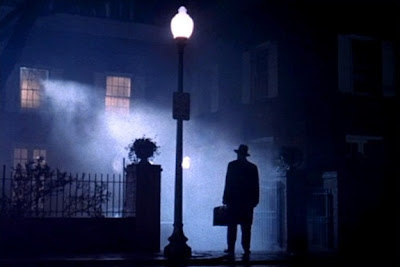
The Exorcist as a TV Series?


I kid you not.

According to Vulture.com the infamous novel and movie are going to be turned into a ten part TV series, which will be shopped to networks in about two weeks. I have to admit, I'm more of an Omen girl, but I'd totally give this a shot, especially if they make use of some of those terror techniques William Friedkin employed in his theatrical adaptation (i.e. silence is scarier than a lot of noise).

Actually, this article says the series will deal more with the building up to and the aftermath of the exorcism but I see a lot room for the creepy stuff.

What do you guys think?

Sunday, May 20, 2012

Podcast Info Galore!


Holy cow! It's the year of the podcast! I am so excited to announce that I'll be the first guest on a new podcast called The Axe to Grind Show! This show will be run by my good friend Nate who is a member of the prestigious Hysteria Continues podcast (a must for slasher fans) and also runs the awesome Facebook page Axe to Grind's Horror Artwork. It will be a 30 minute show completely dedicated to made for television movies and will air at 11 am EST on May 27th (Sunday). I am both thrilled and honored to pop Nate's proverbial cherry while talking about my absolute favorite subject in the world!

And speaking of being thrilled and honored - I will also be putting in another guest spot on the Movies About Girls podcast on June 2nd! The show starts at 6 pm EST and I'll be stopping by around 8 for high jinks and hilarity. This time we'll be talking about the totally awesome flick Ghost World. These guys are hilarious, and make up for my not so funny jokes! Please stop buy and give us a listen!

Friday, May 18, 2012

Crawlspace (1972)


Note: I wrote this piece on Crawlspace for a class I just took on Frankenstein. Our professor wanted us to take a theme from the novel and apply it to something else. After deliberating over several TV movies, including Chiller and Prototype, I settled on Crawlspace because I was rather intrigued by the theme of creating identity through the idealized family unit, and I also thought this movie had made some rather sly nods towards Mary Shelley's classic. I really slaved over this sucker and ended up getting a rather fabulous grade, so I wanted to share!

By the way, if you really wanted to get your Crawlspace-on, you can read this older review where I compare the film to the novel. I've been taking a lot of lit and film theory classes and I have to say, I love seeing all my old favorites through new eyes. Sometimes school is awesome!

And Just a word of warning: this piece is a little long. So read at your own risk!

Oh yeah, and I hope you Enjoy!


Crawlspace: The Belly of the Beast
 
 
Although Mary Shelley’s Frankenstein was written more than 150 years before the 1972 made for television film Crawlspace, the filmmakers have used the story to explore the Othered in search of identity through the romanticized family structure while putting a contemporary spin on it. Many products of 70s television observed lost youth towards the end of the Vietnam War, but Crawlspace handles this material of desire to return to normalcy in more opaque ways. In the film, Richard Atlee’s past is a mystery shrouded in dystopia; he is a marker for the Other, or a modern day Frankenstein-like creature, unable to move into public life. Portrayed as a feral man-child with no stories, no history and hardly any words to explain his past even if he wanted to, he invades the crawlspace beneath the house of Albert and Alice Graves in the hopes they will become parental figures to him. As those who are different from the norm, both Frankenstein’s creature and Richard play on our social fears of the domestic. While Crawlspace maintains the notions of identity creation through the idealized family, it also uses Frankenstein’s monster as a springboard to explore the terrifying disintegration of that same domestic mold of the 1970s.


On the broadest level, Richard is simply an outcast, a symbolic representation of the collapse of the countercultural movement as they broke out of communal living and attempted to drift back into the social order. With no apparent ties to anyone or anything, he aimlessly goes from temporary employment to living in a cave. On a narrower scheme, Richard is emblematic of the failure of that social order he longs to return to. As the number of divorces rose in the 1970s and more people chose to live together instead of marriage, the once comfortable and safe domestic structure began to take on new forms. In response, the traditional family unit can be also be seen as moving into an outsider station because it has inherited a less-than-normal status, branded by changes in the structure.

Richard is drawn to the Graves because they are elderly and childless, living in their own exile on the outskirts of a small New England town. The stigma of their infertile existence is denoted when Alice tearfully reads a letter from her sister that mockingly pronounces, “You have no children to tie you down.” This posits both the Graves and Richard as Others because each lacks the complete nuclear family unit. Their need for a child gives Richard both a metaphoric and literal open door into their lives. However, the couple originally rejects Richard’s effort to claim the crawlspace and lock him out. In response, he scrawls the word “GOD” on the cellar door. He is asking the couple to go against nature, and play God, recreating the monstrous Richard into something that can ease back into the social norm. The gesture indicates a pronounced need for recognition that can only be achieved through accepting parents because that is the one structure Richard feels can authenticate a wholeness. The couple realizes their responsibility and let him move into their crawlspace.


Richard tries to appease the Graves by attempting to give them the son they long for and he transforms the crawlspace into a symbolic womb, where he gestates until he emerges into his rebirth. During his incubation period, which lasts two months, he mulls over small items that he has taken from the main house and through these objects such as yarn and poetry books he begins to assemble the family structure through a patchwork of domestic ideas. In the “pregnancy” scenes, Richard remains hidden from both The Graves and the audience as the camera rests on the face of Albert or looks into the darkened abyss of the house’s womb. This space between Richard and Albert allows the older man time to construct himself as the fatherly figure, encouragingly speaking to the darkness, asking Richard to join the family. Richard is only shown in shadows because he occupies a netherworld of nothingness, and the fact that no one can access a full view of him indicates the character’s own lack of self.

The attempt to craft a family dynamic is seen immediately when he finally emerges from the crawlspace to join the Graves at their Christmas Eve dinner, looking a little like a Jesus figure in a three-piece suit. Vivaldi’s “Four Seasons: Spring” echoes in the background, denoting the transition from the chilly winter gestation into rejuvenation and growth. As the new creation, he is taking on a more normal human form, although his matted hair and wild eyes speaks otherwise. In fact, they are about the only things that do speak, as the new family stumbles through a pleasant but awkward exchange at the dinner table as each new family member attempts to conform to the Other’s expectations.


Herein rests the key to Richard’s character, which lies in his search for recognition and structure. Richard is clearly a derelict who appears to the world as an outcasted infantile adult, but he works at maintaining a “normal” appearance so he can acquire companionship and acceptance. Even his physical imprint speaks towards a lack wholeness. The Graves are told their “son” is “not likely to be traced by his fingerprints,” indicating there is an absence of records to prove he exists and it also gives people an excuse to continually negate Richard of totality. In another moment in the film that cements this idea, Richard attempts to reenter society by running into town on an errand. He is immediately disregarded at the local store, where the employees and customers alike snub him. The clerk eventually takes his money but refuses to let him return home with the groceries. He is chastised for doing good and is seen as a pariah because he is an unknown entity and does not conform to town’s idea of a “respectable” citizen. He continues to be invalidated of full personhood, which leads to a collapse in his fantasies of living within the established social order. This is a turning point of the film because his demands become excessive on his adopted parents and he begins to commit acts of violence, starting with destroying the grocery store, and the viciousness quickly escalates to murder.


Despite the fact that he searches for a way to reinstitute the traditional, he is unable to fit in despite his hardest efforts to transform himself into a Good Son because he is incapable of giving the couple of the perfect child they crave. The character’s inner struggle and frustration is shown through his deviant acts in society. Identity will always elude him if he forces himself and others to create something inorganic. He can only act out in rage when his fantasies collapse precisely because he is constantly denied personhood and not allowed a stronger voice in society.

Richard’s transgression represents the potential of losing control of the complex forces that work against the very social order that he is trying to protect. That he shifts so quickly from subservient to dangerous signifies how easily the traditional family unit can crumble when it only exists to maintain another’s view of what is normal. Crawlspace deems Richard monstrous because he stands as a reminder to the audience of the era’s prevailing social fears regarding the fragmentation of the conventional family. He speaks to the idea that anyone can become Othered when a traditional norm is removed. It is no mistake that Richard tells Albert he stays with the Graves because he wants to feel “safe.” Safe does not mean the home is loving or even healthy. It only indicates that it maintains the societal dictation of how families should be constructed. Richard represents what he, and perhaps the audience of the 1970s, wants to not be, so he seeks solace in a dying tradition, attempting to create a patchwork of family for himself, but it is not a natural setup and easily falls apart.


The conventions of the psychological thriller allow the film to explore the dangers of trying to falsely construct a community to selfishly appease only your needs. The darkness of the crawlspace symbolizes Richard’s demons that keep him outside of society. It also emphasizes how perception can overtake reality in a battle of wills. While the Graves seek out Richard in a mutual response to building a family, it is an unnatural construction that relies on the couple acting and reacting blindly to Richard’s unstable state of mind.

As a metaphor for the death of the nuclear family, Crawlspace examines the ways in which people desperately struggle to maintain a situation whether it is beneficial to them or not. Richard stands for a social anxiety and because he reminds people of the failure of traditional systems, he is marked as monstrous, even though he attempts to fit into the norm. The Graves have a similar struggle, but it is Richard’s overtly menacing presence that expresses the anger over the failure of something traditional. He has not chosen to be an outcast and therefore he goes looking for a structure that will give him an identity as a “normal” person. However, like so many dysfunctional families that choose to stay together simply to maintain appearances, Richard and the Graves have isolated themselves further in an attempt to keep scrutiny away. While family units have managed to reshape themselves into new forms in 2012, Crawlspace remains an astute meditation on 1970s familial anxieties.